Lose on Purpose, Win the War: The Hidden Scouting Tactic Elite Players Swear By
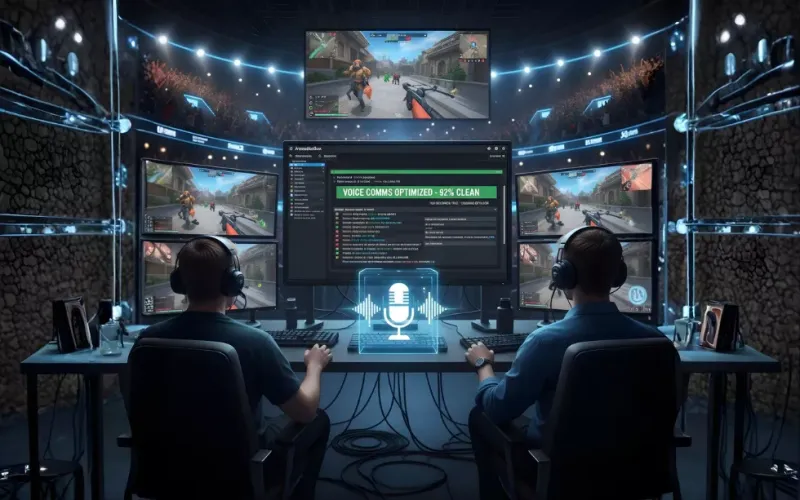
Photo: esports player analyzing opponent strategy on multiple monitors, via annotationbox.com
There's a moment in competitive gaming that looks, from the outside, like a player just gave up. They're not fighting for objectives. They're letting the enemy roam. They're running compositions that don't make sense for the situation. And yet, behind the scenes, that player is doing some of the most focused, deliberate work of their entire career.
Welcome to the world of intentional losing — a counterintuitive training strategy that a growing number of elite esports competitors are quietly building into their preparation cycles. It sounds backwards. It flies in the face of every grind-harder, climb-faster instinct that competitive gaming culture rewards. But when you dig into how top players and coaches actually talk about this method, it starts to make a whole lot of sense.
The Intel Problem Nobody Talks About
Here's the thing about high-level competitive play: the higher you climb, the less information you have about your opponents' true behavior. Ranked queues, public VODs, and even official match footage only show you what a team or player wants you to see. The strategies they deploy in high-stakes moments are curated. Polished. Designed to win, which means they're also designed to hide.
Scrimmages — practice matches between teams — are supposed to close that gap. But there's a fundamental tension in scrim culture. Both sides want to win. Both sides are protective of their best strats. The result is that scrims often turn into a mutual performance where neither team fully reveals their hand.
That's exactly where intentional losing enters the picture.
The core idea is simple: if you engineer a situation where your team appears to be losing — misplaying, running off-meta picks, letting the opponent dictate the pace — your opponent is far more likely to open up and show you things they'd normally keep locked away. Desperation and confidence both make people sloppy. When an enemy team thinks they have the upper hand, they start experimenting. They pull out their comfort strats. They get aggressive in ways that reveal their tendencies.
And that's exactly what the losing team is there to document.
How It Actually Works in Practice
In League of Legends, this approach has been referenced by analysts connected to LCS-level teams as a way to probe opponents' macro decision-making. When a team intentionally cedes early objectives and plays passive, they're essentially asking: what does this squad do when they're ahead? Do they group? Do they split? Do they chase kills when they shouldn't? Teams that snowball efficiently in scrims often reveal the exact sequences they'll run in tournament play — because when they're winning, they stop hiding.
In Valorant, the same logic applies at the agent and utility level. Coaches have talked about running intentionally weak setups on certain maps to bait opponents into showing their full execute sequences. If you already know you're going to lose the scrim, you might as well lose it while watching exactly how the other team likes to take a site when they feel safe.
Fighting game players have their own version of this. At high-level tournaments in games like Tekken 8 or Street Fighter 6, veterans sometimes describe playing the first game in a set almost experimentally — probing for reactions, letting the opponent get comfortable with certain reads, then using everything they learned to dismantle them in games two and three. The first loss isn't a failure. It's the price of admission to real information.
The Psychological Layer
What makes this strategy genuinely sophisticated isn't just the information it produces — it's the psychological warfare baked into it. A team that knows how to look beatable without actually being beatable has a massive edge. They can lull opponents into complacency. They can let rivals build confidence around strategies that have already been studied, catalogued, and countered.
Think about it from the opponent's perspective. You just dominated a scrim against a top team. You feel sharp. You feel like your read on them is correct. You show up to the tournament match with all that confidence intact — and then the team you thought you understood completely dismantles you in ways you didn't see coming. The psychological damage from that kind of reversal is brutal. It doesn't just cost you the match. It makes you question everything you thought you knew.
Coaches who've worked with teams that use this method are careful to point out that it requires serious discipline. The players running intentional loss scenarios have to be completely bought in. If even one person on the team is playing to win out of habit or ego, the whole exercise breaks down. The team needs to be unified around the goal: gather data, not points.
The Risks Are Real
This approach isn't without downsides, and anyone who tells you otherwise is skipping the hard part.
First, there's the morale problem. Losing, even deliberately, can mess with a team's rhythm and confidence if it's not framed correctly. Young players especially can struggle to separate intentional losses from real failures. Coaches who use this strategy consistently say the pre-game conversation is everything — everyone needs to know exactly why they're doing what they're doing before the match starts.
Second, there's the risk of bad habits. If a team spends too much time playing passive, off-meta, or intentionally sloppy, those patterns can bleed into real competitive play. The method works best as a targeted tool used sparingly, not a permanent approach to practice.
Third — and maybe most importantly — it only works if your opponent doesn't know you're doing it. Once the meta around this strategy becomes widely understood, opponents start filtering their own behavior in scrims, which closes the intelligence gap the whole approach is designed to exploit.
What Separates the Players Who Get It
The competitors who use intentional losses effectively share one trait above everything else: they're playing a longer game than everyone else in the lobby. They're not optimizing for today's scrim result. They're optimizing for the tournament match three weeks from now. Every loss in the short term is a deposit into a bank of information they'll cash out when the stakes are actually high.
That mindset — the willingness to look bad now in order to win later — is genuinely rare. Most players, even good ones, are wired to compete in every session. Letting yourself lose on purpose runs against every instinct competitive gaming builds into you.
But that's exactly why it works. The players willing to override that instinct for a strategic purpose are already thinking at a level most of their opponents haven't reached.
The scoreboard doesn't tell the whole story. Sometimes the team walking away with the L is the one doing all the real work.