Focus or Fold: How the Best Competitive Gamers Are Cutting Through Digital Noise to Stay on Top

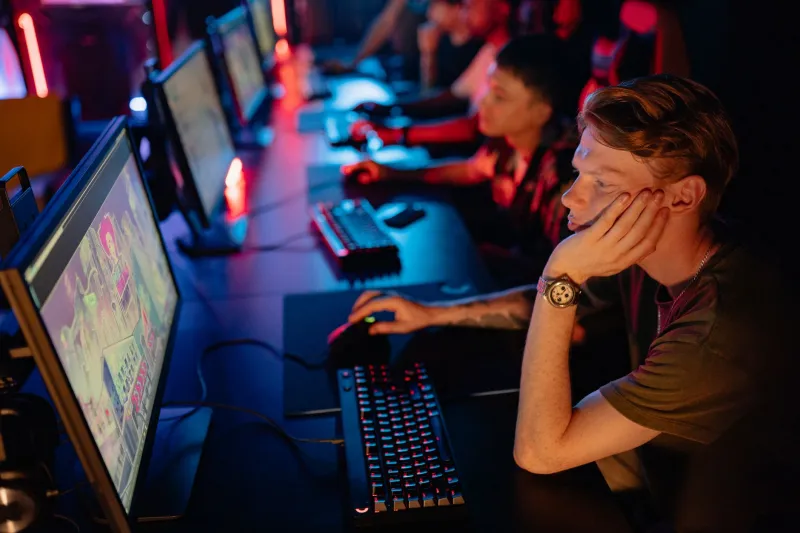
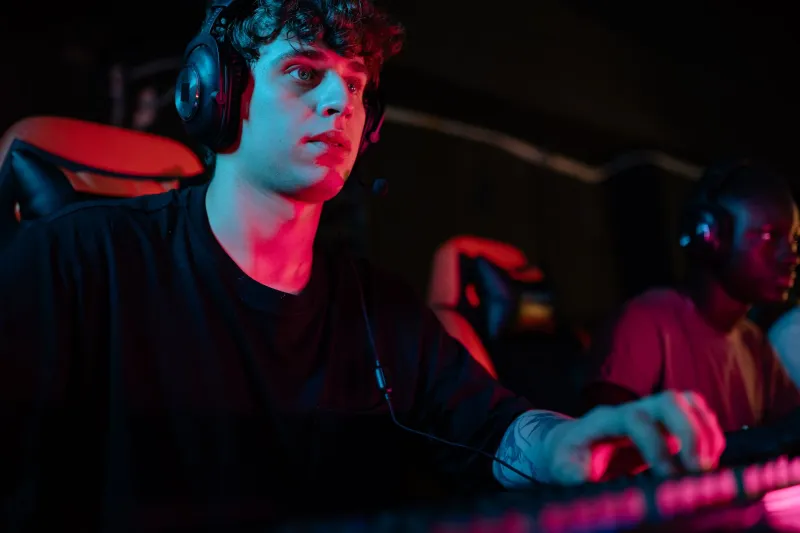
Photo by Photo by Mikhail Pushkarev on Unsplash on Unsplash
You're mid-ranked match, one round away from climbing a tier you've been grinding toward for three weeks. Then your phone buzzes. Then Discord lights up. Then you catch yourself reading a tweet about your main getting nerfed next patch. By the time you're back in the game, you've already lost — mentally, at least.
This isn't a willpower problem. It's an attention problem. And at the highest levels of competitive play, it's quietly becoming one of the most expensive mistakes a player can make.
The Hidden Cost Nobody's Talking About
Sports psychologists have been sounding the alarm on this for a while now, but the esports world is only just starting to take it seriously. Dr. Leah Voss, a performance psychologist who works with collegiate esports programs across the Midwest, puts it bluntly: "Attention is a finite resource. Every time a player splits their focus — even for two seconds — there's a recovery cost. In a game where decisions happen in milliseconds, that recovery cost is massive."
The research backs her up. Studies on cognitive load consistently show that task-switching doesn't just slow you down in the moment — it degrades overall performance for minutes afterward. In a game like Valorant or League of Legends, where a single misread can swing an entire round or objective fight, those degraded minutes are brutal.
And the sources of distraction have never been more aggressive. Push notifications, Twitch chat, Twitter drama, Discord pings, YouTube rabbit holes — the modern competitive player is surrounded by systems literally engineered by the smartest companies in the world to steal their attention. The house always wins unless you change the rules.
How the Pros Are Locking In
The players who are climbing — and staying — at the top are treating focus like a skill to be trained, not a personality trait you either have or don't. The strategies they're using aren't glamorous, but they work.
Device separation is becoming standard practice. A growing number of pro players and serious ranked grinders are keeping a dedicated gaming PC that has zero social media apps installed and no browser bookmarks pointing anywhere that isn't directly related to their game. Phone goes in another room during sessions. No exceptions.
Scheduled distraction windows are replacing constant availability. Instead of leaving Discord running all day and checking Twitter between every queue, top players are batching their digital consumption. Thirty minutes in the morning, thirty minutes after sessions end. The rest of the day is protected. One pro support player in the LCS ecosystem described it as "treating my focus like a scrim block — it's scheduled, it's intentional, and nobody gets to interrupt it."
Streaming culture is a double-edged sword. This one's complicated. Streaming is a massive income source for pro players and a way to build community. But the cognitive demands of playing and performing simultaneously are real. Several high-profile streamers have quietly shifted to separating their ranked grind from their stream days entirely — going live only for practice-adjacent content or casual play, keeping their serious competitive sessions completely off-camera and off the record.
The Social Media Trap
Here's where it gets particularly rough for players who are also building personal brands. Social media isn't optional anymore if you want sponsorships, fans, and long-term career sustainability. But social media is also one of the most aggressive attention-hijacking machines ever built.
The players losing the most to distraction aren't just casual scrollers. They're players who've bought into the idea that being constantly online is part of the job — and technically, for the brand side of things, they're not wrong. The problem is that "always on" for the brand bleeds into "always distracted" for the competitor.
Dr. Marcus Tillman, a behavioral researcher who consults with performance athletes in both traditional sports and esports, frames it this way: "The same dopamine loop that makes social media addictive is the same loop that makes it catastrophic for sustained competitive focus. You're training your brain to expect constant novelty. Then you sit down for a three-hour ranked session and your brain is screaming for a hit of something new every four minutes."
Some players are hiring social media managers specifically so they can stay present online without actually being present online. Others are leaning hard into scheduled posts and pre-written content. The goal is maintaining a digital footprint without paying the cognitive toll of real-time engagement during competition windows.
Measuring the Gap
What makes this conversation more than just productivity talk is that the performance difference between high-focus and low-focus players is becoming measurable in ways the competitive community can actually see.
Coaches at the semi-pro and pro level are starting to track not just in-game stats but session quality metrics — win rates during focused sessions versus sessions with reported distractions, decision-making speed in high-pressure moments, and tilt recovery time after a bad round. The data, anecdotally at least, is consistent: players who protect their attention environment perform more consistently over long sessions and show significantly better mental recovery after mistakes.
One analyst working with a North American Challengers team described reviewing VODs where you could almost pinpoint the exact moment a player had checked their phone mid-session — a string of passive decisions, slower rotations, missed callouts. "It's not obvious in the moment," they said, "but when you watch it back, the drop in engagement is visible. The game is still running but the player kind of isn't."
Building Your Attention Defense
If you're serious about competing — whether that's climbing ranked, grinding tournaments, or eventually going pro — your attention environment deserves the same intentional design as your hardware setup. Here's where to start:
- Audit your session environment. What's running in the background? What's within arm's reach? What can notify you? Eliminate everything that doesn't serve the session.
- Set a distraction budget. Decide when you'll engage with social media and Discord, and stick to it. Treat it like a schedule, not a vibe.
- Separate your streaming identity from your ranked identity. If you stream, consider whether every ranked session needs to be content. Protecting some play time from performance pressure changes how you make decisions.
- Train your focus like you train your mechanics. Start with shorter distraction-free blocks and build up. Thirty minutes of locked-in play beats two hours of half-present grinding every time.
The Real Meta Shift
Talent is getting more evenly distributed across competitive gaming. Mechanics can be copied, strategies get solved, patches level the playing field. What's harder to replicate is the player who shows up completely present, every session, and never gives mental real estate to anything that isn't the game in front of them.
The attention economy is real, and it's extracting a toll from every player who doesn't actively defend against it. The ones who figure this out early aren't just winning more — they're building a competitive foundation that compounds over time while everyone else is busy fighting for their own headspace.
In a game where every edge matters, focus might be the last one that's still underpriced.