Hate Fuel: How the Most Despised Players in Esports Turned Enemy Number One Into Their Greatest Competitive Edge
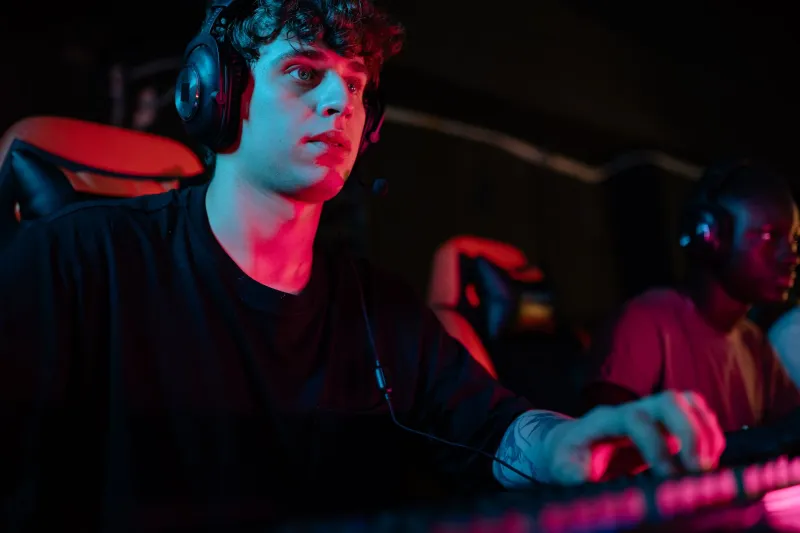
There's a specific kind of energy that fills a tournament arena when the most hated player in the scene walks onto the stage. The boos are real. The memes are ready. Half the crowd showed up specifically hoping to watch this person lose. And somehow — infuriatingly, almost impossibly — that player performs better than they ever do when nobody cares.
That's not a coincidence. That's a strategy.
The villain arc in competitive gaming is older than streaming, older than esports organizations, older than prize pools that could buy a house. But in the modern era, where every tweet lives forever and a single clipped moment can define your public identity for years, some players have figured out how to turn mass dislike into rocket fuel. Not by accident. On purpose.
Why Hate Is a Performance Enhancer
Sports psychology has known for decades that external pressure doesn't affect all competitors the same way. Some players crumble under scrutiny. Others — a specific personality type that researchers sometimes call "challenge-oriented" — actually sharpen when the stakes feel personal.
For players who fall into that second category, being universally rooted against doesn't create anxiety. It creates clarity. Every match becomes a referendum on whether the haters are right. That's not a burden. That's motivation with a face on it.
The psychological mechanic here is something called "reactance" — the deeply human drive to do exactly what you're told you can't. When an entire community decides a player is washed, overrated, or just straight-up bad for the scene, the competitors who thrive on reactance don't internalize that verdict. They treat it as a challenge issued directly to them. And they answer it on the server.
The key distinction is internal narrative. Hate only works as fuel if the player controls how they frame it. "Everyone wants me to fail" is a crushing thought for someone who needs external validation. For someone who has genuinely detached their self-worth from community opinion, that same sentence becomes a setup for a comeback story they're writing in real time.
The Calculated Villain vs. The Accidental One
Not every hated player chose the role. Some earned their reputations through genuinely bad behavior — harassment, cheating allegations, or conduct that crossed lines the community couldn't forgive. Those are accidental villains, and their stories rarely end well competitively because the mental weight of unresolved shame tends to compound over time.
The players who actually benefit from villain status are the ones who made a deliberate choice somewhere along the way. They leaned into the persona. They stopped apologizing for a playstyle the community found disrespectful. They made the controversial call in a high-profile match and then refused to walk it back when the discourse exploded.
There's a version of this playbook that shows up repeatedly in fighting game communities, where players who run "cheap" or "degenerate" strategies get labeled as scrubs by purists — and then cash checks at majors while the purists are watching from the stands. The player who mastered the most hated character in the current meta and rode it to a top-three ranking at a national tournament didn't stumble into that position. They saw the hate coming, measured it against the results, and decided the results were the only scoreboard that mattered.
In Battle Royale and tactical shooter scenes, the same pattern plays out differently but with the same core logic. The player known for "rat" strategies or hyper-passive positioning gets flamed constantly on social media. The clips of them winning by doing the "unfun" thing rack up thousands of angry comments. And their tournament record keeps climbing.
The Fine Line Between Edge and Career Implosion
Here's where the playbook gets genuinely dangerous, because the line between calculated villainy and self-inflicted career damage is thinner than most people realize.
The players who weaponize hate successfully have one thing in common: their controversial reputation is built on how they play, not on who they hurt. Trash talk that stays competitive, playstyles that opponents find frustrating, public confidence that reads as arrogance to outsiders — these are all forms of controversy that the audience can project onto and argue about without anyone actually being harmed.
The moment the controversy shifts from "this player is annoying to play against" to "this player said something genuinely harmful" or "this player cheated" or "this player targeted a specific person" — the psychological math changes completely. Now the hate isn't a uniform wall of competitive pressure. It's a specific accusation with specific consequences. Sponsors notice. Tournament organizers notice. And the mental energy required to manage that kind of scrutiny stops being motivating and starts being consuming.
The players who've navigated villain arcs successfully over long careers are almost always the ones who understood this distinction intuitively. They controlled the kind of hate they invited. They were provocative without being predatory. They made people want them to lose without making people want them gone.
What Opponents Get Wrong
One of the most underrated competitive advantages of the villain persona is how badly it messes with opponents' heads.
When you're preparing to face the most hated player in the scene, you're already carrying extra weight. The community is watching to see if you can be the one to finally put them down. Your chat is full of people treating this like a moral obligation rather than a match. You're not just trying to win — you're trying to win correctly, to expose them, to make a statement.
That's a fundamentally different mental state than simply trying to execute your game plan. And the villain knows it. The villain has been in the spotlight long enough to feel comfortable there. You haven't.
This dynamic shows up in high-stakes sets constantly. The underdog who was supposed to finally dethrone the villain plays tentatively, tries to force highlight moments, second-guesses their own read of the situation because they're performing for an audience rather than competing against an opponent. The villain, meanwhile, is just playing the game they've been playing under pressure for months.
Owning the Meta on Your Own Terms
The broader lesson from the villain arc playbook isn't really about controversy. It's about identity under pressure.
The players who thrive in this lane have done something that most competitors never fully accomplish: they've separated their performance from their approval rating. They don't need the crowd. They don't need the community to validate their reads or celebrate their wins. They've built a self-concept that's durable enough to hold up when literally everyone in the building is hoping they lose.
That kind of mental independence is, ironically, one of the cleanest competitive advantages in the game. You can't patch it. You can't counter-pick it. You can't scout it in VOD review.
Hate them or not, the players who've figured out how to run the villain arc without imploding are running a strategy that most of their opponents haven't even started to develop. And in a scene where the mental game separates good from elite, that gap is a lot wider than it looks from the outside.