Stop Grinding, Start Winning: Why More Hours in the Chair Is Actually Holding You Back
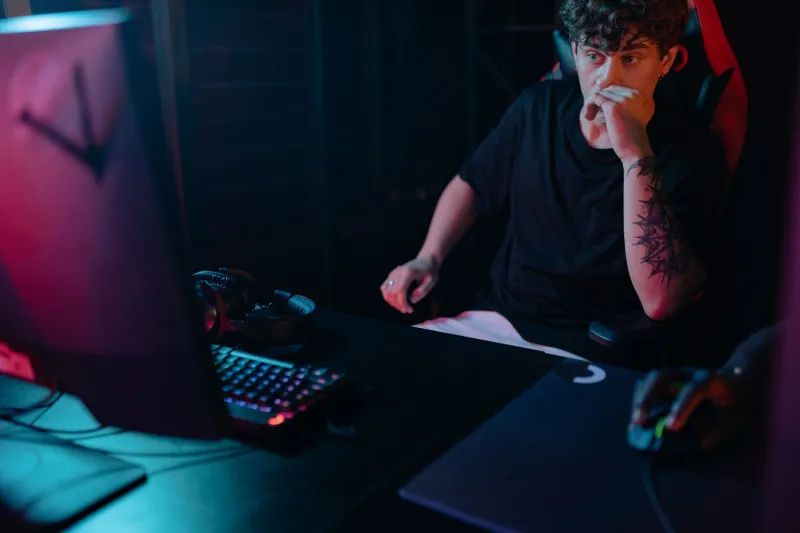
There's a grind culture problem in competitive gaming, and nobody wants to talk about it because hustle is supposed to be sacred. Log on to any Discord server, any subreddit, any streamer's chat at 3 AM and you'll find the same gospel being preached: more hours, more ranked games, more repetitions. Grind until your eyes bleed. Grind until you dream in kill feeds.
Here's the thing nobody's saying out loud — that approach is quietly destroying your competitive ceiling.
The top players aren't grinding more. They're grinding better. And the difference between those two things is the real divide between players who plateau at Diamond and players who cash checks at LAN events.
The Diminishing Returns Nobody Talks About
Sports science has known for decades what competitive gaming is only starting to absorb: cognitive performance degrades sharply after extended periods of high-focus activity. A study out of the University of Illinois found that mental performance drops significantly after about 50 minutes of continuous concentration without a break. Your reaction times slow. Pattern recognition gets sloppy. Decision-making under pressure — the exact skill that separates good players from great ones — starts to crumble.
Yet the average ranked grinder is playing four, five, six-hour sessions back-to-back, convincing themselves that the fatigue they're feeling is just weakness to push through. It's not weakness. It's biology telling you that the next three hours of gameplay aren't practice — they're just expensive reinforcement of bad habits.
Elite players have started calling this the Grind Trap: the illusion that time spent equals skill gained. You can play 2,000 hours of the same mistakes and just get faster at making them.
What Deliberate Practice Actually Looks Like
Psychologist Anders Ericsson's research on expertise — the same work that spawned the (slightly oversimplified) 10,000-hour rule — had a critical component that pop science loves to strip out: the hours only count if they're deliberate. Structured. Focused on specific weaknesses with immediate feedback loops.
For competitive gamers, deliberate practice looks nothing like a ranked grind. It looks like this:
Targeted skill isolation. Instead of running full matches and hoping improvement happens organically, elite players isolate specific mechanics. Aim trainers like Aimlabs and KovaaK's exist for a reason. A Valorant pro working on their flicking accuracy isn't queuing ranked for four hours — they're running drills for 45 focused minutes, reviewing data, adjusting, and stopping before fatigue corrupts the muscle memory they're building.
VOD review with intent. Watching your own replays without a specific question in mind is barely more useful than watching TV. The pros who improve fastest come to VOD sessions with a framework: What positioning errors cost me rounds? Where did my decision-making lag behind my mechanics? They're diagnosing, not just observing.
Opponent modeling. Some of the sharpest improvement cycles come from studying enemies rather than practicing your own mechanics. Understanding why you lost a fight — not just that you lost it — compresses the learning curve dramatically.
The Session Structure That's Actually Working
Here's a framework that high-level players across games like CS2, League of Legends, and Apex Legends are quietly adopting:
The 90-Minute Block. Cap focused practice at 90-minute intervals, not entire days. Research on elite athletes consistently shows that top performers across disciplines rarely sustain more than four hours of truly deliberate practice daily — and that's split into chunks, not marathons.
The Pre-Session Intention. Before you queue, write down one specific thing you're working on. One. Not "play better" — something measurable, like "track enemy cooldowns before engaging" or "hold angles for two full seconds before peeking." Vague intentions produce vague results.
The Post-Session Debrief. Spend 10 minutes after every practice block reviewing what you did well and what missed the mark. This isn't optional. The debrief is where the actual learning gets locked in. Skip it and you're leaving most of the session's value on the table.
Built-In Recovery. Scheduled breaks aren't laziness — they're maintenance. Walking away from the setup for 15-20 minutes between blocks isn't lost practice time. It's the reset your prefrontal cortex needs to keep performing at the level your competitive goals demand.
The Mental Side of Quitting While You're Ahead
Here's where most players hit a psychological wall. Stopping a session when you're playing well feels wrong. When you're in a groove, when the shots are landing, when the reads feel effortless — that's when every competitive instinct screams to keep going, to bank those good vibes into more games.
Resist that instinct.
Ending a session at a high point does two things. First, it reinforces the neural patterns associated with successful play rather than the degraded patterns that come with fatigue-driven losses. Second, it keeps your relationship with practice positive, which matters more for long-term development than any single session ever could.
The players who dominate tournaments aren't the ones who ground the most hours in the off-season. They're the ones who built sustainable systems that kept them sharp without burning them hollow.
Dominate Smarter, Not Longer
The grind isn't going anywhere as a cultural force in competitive gaming. The aesthetic of the sleepless grinder is too embedded in the community's identity to disappear. But the players who actually reach the top — and stay there — are increasingly the ones who treat their practice like a precision instrument rather than a blunt object.
More hours in the chair is not the answer. Better hours are. Figure out what you're actually working on, structure your sessions around that target, and have the discipline to stop before the chair starts working against you.
The meta rewards the sharp. Not the exhausted.