Fake Names, Real Damage: How Smurf Accounts Are Quietly Wrecking Ranked Play

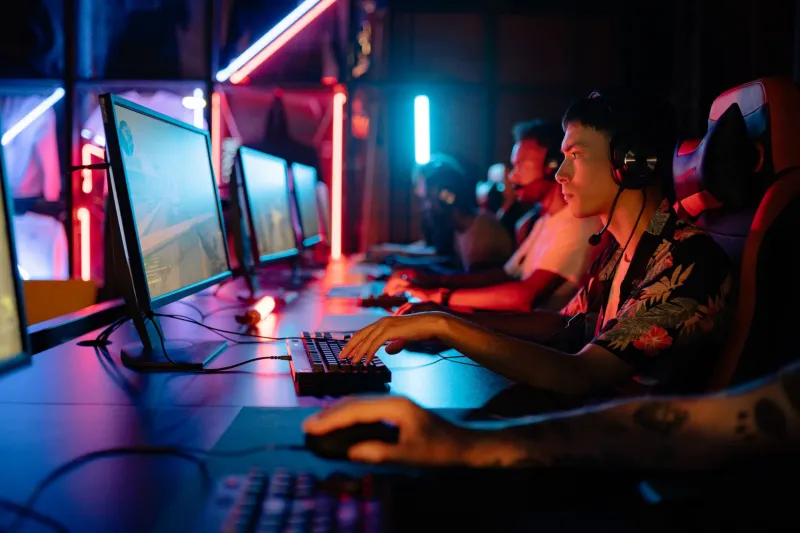
Everybody knows the feeling. You queue up for a ranked match, you're grinding your way through Silver or Gold, and then it happens — some dude with a suspiciously low-level account drops 40 kills like he's playing against NPCs. The name's unfamiliar, the profile's fresh, but the mechanics? That's a Diamond player at minimum. Maybe higher. You've just been smurfed.
Smurfing — the practice of experienced players creating alternate accounts to compete in lower skill brackets — has been a fixture of competitive gaming for decades. The term itself dates back to the late '90s Warcraft II scene. But what was once a niche quirk has metastasized into one of the most corrosive forces in modern ranked matchmaking. And the people most responsible for normalizing it? Some of the biggest names in esports.
The Pro Player Defense (And Why It Doesn't Hold Up)
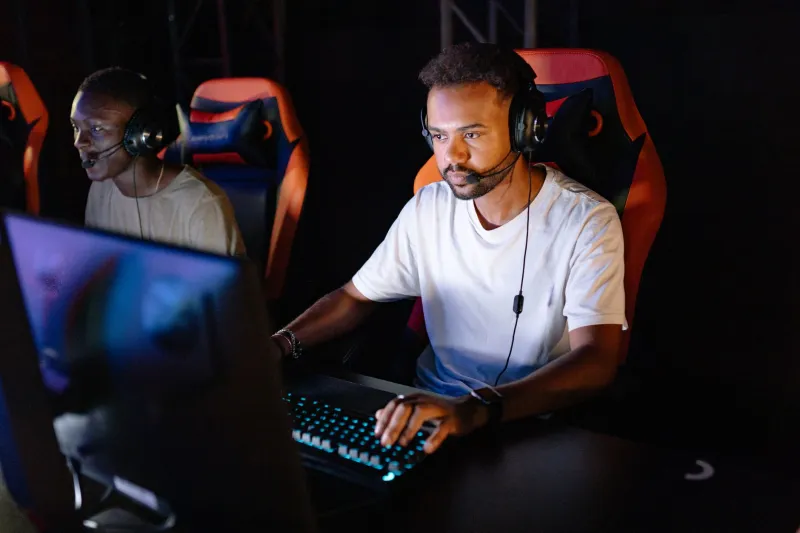
Ask a professional player or popular streamer why they smurf, and you'll get a familiar rotation of justifications. "My main account gets targeted." "I need a fresh environment to practice new agents/champions/operators." "It's just for content."
Those arguments aren't entirely without merit. High-profile players genuinely do face stream snipers, targeted harassment, and opponents who spend the entire match trolling them rather than playing normally. One Valorant pro — who asked to remain anonymous because, well, his org would probably prefer he didn't say this out loud — put it bluntly: "My ranked experience on my main is basically unplayable at this point. People recognize me and either try to grief me or they completely throw strategy out the window trying to impress me. A second account gives me something close to a normal game."
Fair enough. That's a real problem. But here's where the logic collapses: the solution to one person's ranked experience being ruined is apparently to ruin ranked experience for dozens of others. The math doesn't work. A Challenger-level League of Legends player queuing in Gold isn't just winning games — they're actively distorting the skill assessment system that every other player in that lobby depends on to accurately track their own improvement.
The Data Problem Nobody Wants to Talk About
Researchers and community analysts have been quietly building a case against smurfing for years. Studies examining League of Legends matchmaking data have found that games involving accounts with artificially suppressed MMR show significantly higher rates of early surrenders, chat toxicity, and post-game reports. The correlation isn't subtle.
When a smurf enters a lobby, the competitive balance that ranked mode is supposed to guarantee evaporates. The players on the losing side aren't getting a fair shot at improvement — they're getting farmed. And the psychological toll of repeatedly losing to opponents who are operating several skill tiers above you is measurable. Player retention surveys from multiple titles have flagged ranked frustration as a top-three reason new and returning players disengage from competitive modes.
That last part matters enormously. The esports ecosystem runs on a pipeline of new players converting into invested community members. When that pipeline gets clogged by demoralized newcomers who feel like the game is rigged — because, functionally, it is — the whole competitive scene shrinks. Fewer players means worse matchmaking quality at every level, which makes the smurf problem worse, which drives out more players. It's a feedback loop, and it's not a good one.
Orgs and Publishers: The Accountability Gap
Here's the uncomfortable truth: the organizations that sign and profit from pro players have almost no formal policy on smurfing. Some publishers have taken swings at detection — Riot Games has implemented systems that attempt to identify and fast-track smurf accounts through the ranks, and Blizzard has experimented with phone number verification requirements. But enforcement is inconsistent, detection is imperfect, and the penalties when pros get caught are usually nothing more than a slap on the wrist.
Esports organizations, for their part, treat smurfing as a non-issue. There are no standard conduct clauses in player contracts addressing alternate account behavior outside of official competition. No org has ever publicly disciplined a player for smurfing in ranked. The implicit message from the institutional side of esports is clear: this isn't our problem.
It should be. If a franchise player is torching Bronze lobbies on stream and building a content brand around how easily they can dismantle lower-ranked opponents, the organization attached to their jersey is benefiting from that content. That means they have skin in the game. It's not unreasonable to expect some accountability in return.
What Actually Fixing This Looks Like
Let's be real — smurfing will never be completely eliminated. The incentives are too strong, the detection is too imperfect, and determined players will always find workarounds. But "perfect" shouldn't be the enemy of "meaningfully better." There are concrete steps the industry could take right now.
Publishers need smarter, faster MMR calibration systems. If a new account wins ten straight games with a 75% kill participation rate, the algorithm should recognize that this is not a Bronze player and adjust accordingly — aggressively. Some games are getting better at this, but the calibration windows are still too long and too forgiving.
Organizations should adopt explicit smurfing clauses in player contracts, particularly around ranked gameplay that's being streamed or monetized. You want to practice on a second account privately? Fine, whatever. You want to build a content series around dunking on Gold players? That's a different conversation, and orgs should be having it.
The community itself has a role to play, too. The culture of celebrating smurf clips — the highlight reels of pros going 30-2 in low-elo lobbies — normalizes the behavior and turns something genuinely damaging into entertainment. It's worth asking whether that's the kind of content the competitive community actually wants to reward with views and engagement.
The Bigger Picture
Smurfing sits at the intersection of two things competitive gaming has always struggled to balance: the freedom of individual players to use the game however they want, and the responsibility of maintaining an environment where competition is actually meaningful.
Dominating your opponents is the whole point of competitive play. That's not in question. But domination only means something when the competition is real — when both sides have a genuine shot at winning based on skill, preparation, and execution. The moment you remove that baseline fairness, you're not competing anymore. You're just bullying.
The ranked ladder is supposed to be the proving ground where players measure themselves honestly against the field. Smurf accounts don't just distort that measurement for one match — they erode the credibility of the entire system, one fake account at a time. And if the competitive scene can't police itself on something this fundamental, it's going to keep bleeding the exact players it needs most to survive.